My memories of İstanbul are fragmented along the narrow roads of the city, while the biennials and resistances of the city between 2012 and 2019 recollect these fragments to tell many intriguing stories to link the destiny of this Unreal City with the memories from other cities, countries, continents, planets and spaces. For a young person who just left home to settle in a different city, the biennials’ power of building, destroying and restoring an imaginary city always leave me in awe. Even in times of country’s deep national security issues, the ease of the artworks in creating constellations around the unreconcilable parts of the city turns one’s experience of the city an unending loop, a joyful hit to the wheel of fortune without knowing where it will stop.
The time I left the city, my eternal beloved Waste Land, corresponds to the times of the pandemic. Just before the curfew started, I was already visiting Ankara. Then, I was stuck there. These were the times I started running as well, a good escape for freedom. When the curfew was announced I still had a home and a good academic job in İstanbul to return back. I remember so well thinking how I finally settle down in this chaos after 7 years, well I underestimate the life always finding ways to sprout chaos in different ways. Thus, the non-ending pandemic forced me so many decisions: First I quitted the job, and closed the house. Even when I did these consequently, I never thought I will never go back to my Waste Land, I could not possible comprehend such a possibility of being outside of this mice wheel. In fact, this was the case, I was the mouse who was still running, unaware of being kicked off from the wheel. So was my first return to İstanbul after I left her, to run the 2021 İstanbul Marathon. Just as the fragmented experiences the biennials bestow of the city, all of which you relate in your own authentic way, in a way to form you as who you are, running the most beautiful parts of this Unreal City in 42,195 km created a similar effect in me. Now I will attempt to merge them, now that I finally distance myself from these dreamy fragments in time and space, now that I store them in a time capsule once and forever.
My speed train ritual for entering the Unreal City since 2012: Just when the train approaches the Pendik station, I listen to the song Rapsodi İstanbul. This is a ritual not to miss, just like my luck omen before the city starts. Where does the Unreal City start, really? The unforgettable depictions of the Anadolu Sürat Katarı from Nazım’s Memleketimden İnsan Manzaraları appears in my mind so vividly. Beyond Pendik (even Kartal), the city is no longer referred to as İstanbul- maybe this is the reason I draw the borders as such. Travelling with trains always bestows you the luxury to draw the lines and borders for your any Unreal City as you wish. Trains are time travels to the nationless ages, though not so long ago, where there were no borders as we understand today, no need for passports to cross them. It is impossible to be in awe with the magical continuum in the landscapes and in the humanities while making thousands of miles with trains. Then, we also had buses to bridge Ankara and İstanbul, specifically AŞTİ and Esenler (or Alibeyköy, or Dudullu) Otogar, in-between them you have the security of tea-cigarettes-public toilette-lentil soup in weird places that anyone can accustom to so unexpectedly easy. The feeling of trust that you can always get the tea-cigarettes-public toilette-lentil soup (with or without a slice of lemon, and peppers) in this same order in these heterotopias maybe the only sense of security I am left with in time. These travels with bus usually take place at nights, where the nights’ silence is accompanied with the voices of my friends that I lost earlier in their lives. There were times I could express to no one, but only the busses on the highways at nights made me recall their kind voices echoing in my soul again, making me cry in the endless nights. As they passed away one by one from this world, and the world turned around herself in several times, each new turn bringing more disastrous events and sorrows, evolving times where we experience everything we saw in sci-fi movies a few years earlier. Each turn makes us a witness of the Flood, leaving me in gratitude that my gone friends had at least missed these disasters by hair’s breadth, this is how I comfort myself on their diminishing existence on this Earth.

While travelling with bus, you cannot know you arrive at İstanbul until you are crossing the bridge, “Welcome to Europe”. Each time leaves you in awe with the endless attempts to link two continents, ever-increasing attempts at bridging. My last arrival to the city was closely linked with the Bosphorus Bridge, or so-called 15 July Martyrs Bridge, as the İstanbul Marathon (previously known as Intercontinental İstanbul Eurasia Marathon) starts at the Asian side of the Bosphorus Bridge and crosses it, then travels the historical continent where it ends in Sultanahmet. Friday 5 November, 2021 marked an important day for the Boğaziçi Resistance against the trustee rector: The Day 300 of Resistance. For 300 days, every day academicians gather at the center of the South Campus to protest, and they are still resisting: “Kabul etmiyoruz, vazgeçmiyoruz!” (we do not admit, we do not give up!).

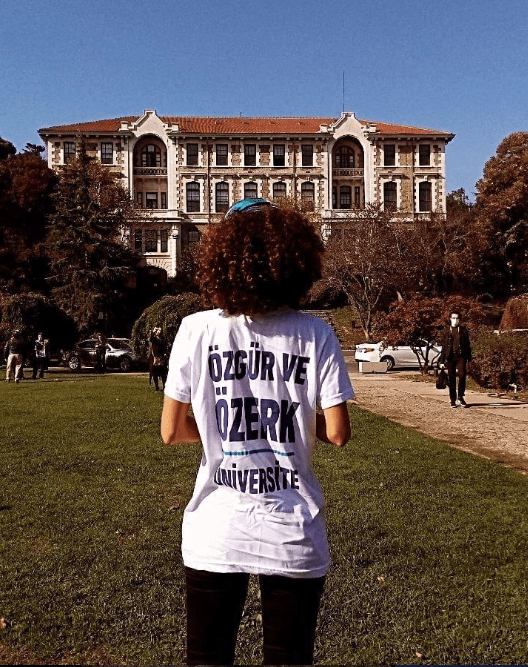
Organized with the spirit of this day of the resistance, under the name “Boğaziçi Koşuyor” (Boğaziçi Runs) to have a presence in the İstanbul Marathon on November 7, we participated to the marathon as a group of academicians, students, alumni. For most people in the group, it was more of a walking with the “Boğaziçi Koşuyor” t-shirt-which was taken as a protest item for the police and was questioned so harshly-and stopping by Beşiktaş once the bridge is crossed as the downhill of Barbaros Boulevard enables us to run smoothly inbetween the orchestras and supporters. I participated the full distance marathon, to have a full distance of time to reflect on my memories on the way: How relative the time is, the more space you need to reflect on your mind and emotions, the more breaths you will be taking in and out on your way. Many a so-called close friends adopted the ideas of thinkers and writers to discourage my attempts at running, by citing Frederic Gros’s The Philosophy of Running, by promoting walking on their own accounts. Yet, everyone should experience for themselves how running is capable of developing a way, an activity rarely a fruit of any human endeavor. Before the event, Can Candan gave us a webinar on making documentary with the tools everyone has, such as smartphones. Can Candan’s place in my intellectual life is so special: I have taken Turkish documentary class from him as an undergraduate, and some of the fruits from this class I have in this blog. “Benim Çocuğum” is one of his documentaries that I was so surprised to see my dentist in Ankara is broadcasting that on her dental chair to the visitors: Such a creative way of exposing oneself to the ideas that are rarely acknowledged in our society. With the vision we developed with the inspiration we take from him, as his students, we take account of the events that passes by, the events that are finding themselves a place in the history scene, and the events that are short-lived like a butterfly. When they handcuffed the gates of the university, we were there to resist, just as much as we resist even in our good times with a vision seeing the upcoming times of oppression. The failure to be prepared beforehand never hindered us from adding more joy and presence to the resistance.
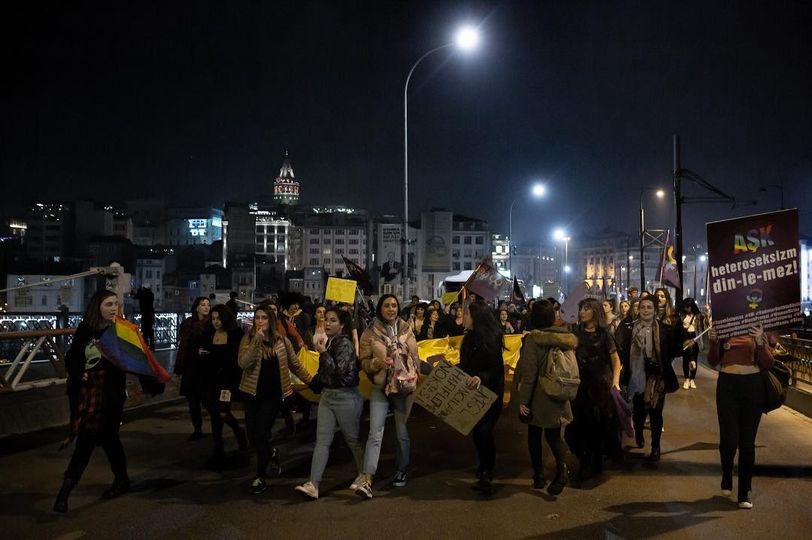
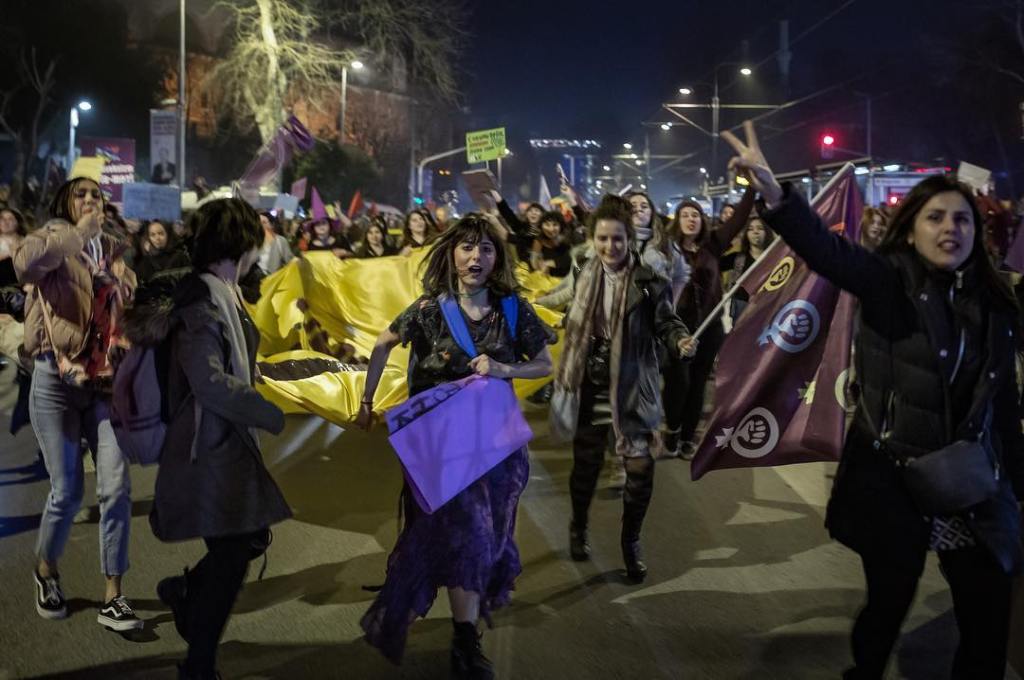
As I was running towards the Galata Bridge, I did not know I was passing through the last joyful crowd of supporters. On March 8, 2018 at Feminist Night March starting at İstiklal Street, as the police violently swept us through the branch roads, as women we managed to meet and run towards the Galata Bridge. Almost became invisible, nothing had stopped us, when we reached Eminönü we stopped ourselves just like waking up from a deep dream. My ultimate heterotopia, Eminönü, where you can find everything you need. Yet, what makes Eminönü special is that you come across so many weird objects that you never know you would ever need: Once you are told their function, pff, all the magic is gone. Modest shops, some even looking more like an abandoned caravan when they are closed, make homage to great artisans and artists by hosting them. One of these artisans was Murat Bey, whom I got familiar with his fame when I was at high school in Ankara. My first amateur fountain pen that I aspire so much to writing was not working properly and I took it to a stationary shop in Ankara. There, they spoke of Murat Bey with great respect and told me that they would send the pen to him. I wanted to visit his place by myself, although I never knew I would be going to İstanbul in the future. One of the first places I visited in İstanbul was his small shop, in all my youth shyness. It was full of gems: Still the pen collections he showed me stuck in my head. The way a modest place like that store so many gems stayed with me like a metaphor between me and my soul. With the pen he repaired, I took all the notes from my philosophy classes, by so many valuable thinkers, some had passed away gently from this Earth. Being his youngest customer back then flattered me so much, knowing that Murat Bey also repairs some of the known poets and historians that I aspired.
The best view of this heterotopia you could get, though, is from Galata, for sure. When I was working as an art guide for İstanbul Biennial in 2015, an art critic that I had been guiding along the SALT Galata exclaimed in awe, looking from the window of the gallery that is viewing Galata Bridge and Eminönü: “Is this an installation by Anselm Kiefer?”. I still wonder if he would appreciate all the mess, dirt, rubble and scrap had he not thought of it as an artwork. Speaking highly on the Bosphorus, and the places it bridges, especially in the context of that biennial, which has “Saltwater” as its conceptual framework, no one ever talks about the Galata Bridge. The modesty of the Galata Bridge feeds on the destiny of the places it bridges, as well: Two heterotopias in an Unreal City, the historical peninsula. The Galata Bridge could never have the power to declare an ending to a lifetime condemnation, yet Bosphorus has as it had with Io. Next time when I am condemned to wander around the Earth, I will start with the Bosphorus in a hope to meet Prometheus earlier.

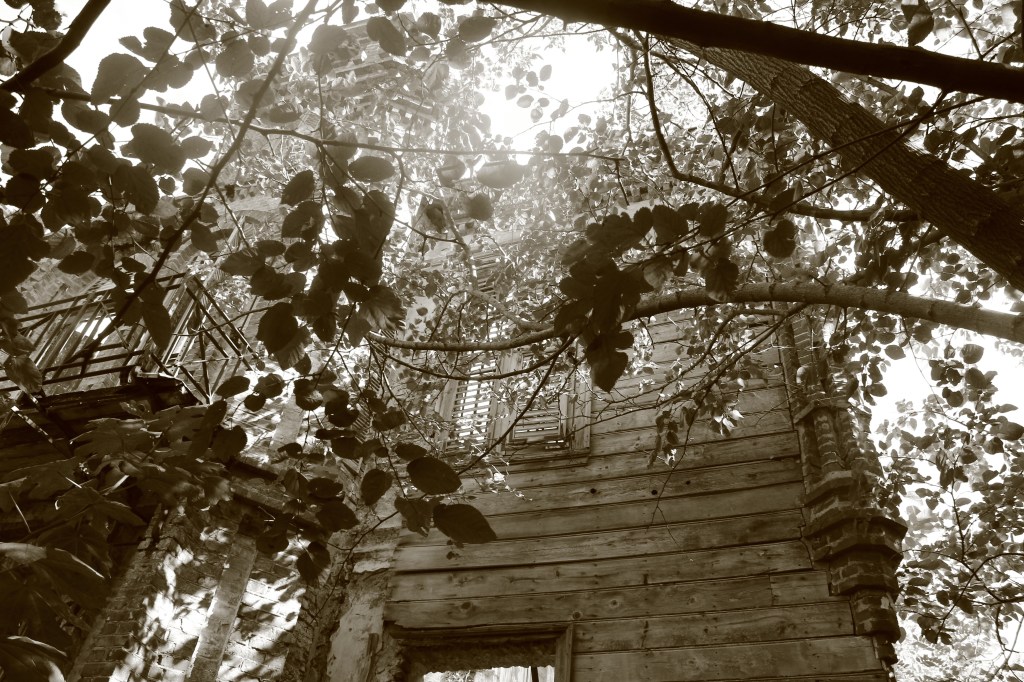
Just as my chaotic memories, the marathon felt longer on these roads over Galata Bridge and Eminönü: As we cross over Sirkeci two times, the last one towards the finish line through Gülhane Parkı. One year later, I run another marathon there and crossed the Galata Bridge (not Bosphorus this time), traveling towards Balat, my workplace for 4 years. Since 2012 when I first moved to the Unreal City, since 2013 the start of a restless resistance, since 2015 the non-ending story of the Saltwater and the thought-forms has started, since 2016, since 2021 my first marathon, until now I am writing these lines on July 19, 2023: The Ox that crossed the Bosphorus visited Trotsky, with a few friends he anachronistically met at Noah’s Ark. Since when… is not so important: Everything starts but nothing ends in this Waste Land.

 BESTE GÜN ASLAN