ACADEMIA
My academic interests concentrate around the fields of ecological economics, philosophy of science, political ecology; theories of value, of rationality; and specific topics that can be exemplified (and not exhausted) as just transition, energy transition from fossil fuels, coal, biodiversity accounting, ecosystem services, environmental valuation, socio-ecological indicators for sustainability, calculation debate, environmental justice, degrowth and ecosocialism. What unifies these various distinct research interests, as conceptual tools towards an ethos in practice, in my vision is my ambitious— to a degree of feverishness— belief in ecosocialist and vegan utopia, for us all to witness in our lifetime.
I am a PhD fellow at CENSE & CHANGE, NOVA School of Science and Technology FCT, Portugal since October, 2022. My research bridges the two distinct research areas of CENSE, namely Ecological Economics & Environmental Management and Energy & Climate. More specifically, my PhD thesis is exploring the indicators for just energy transition in their potential to integrate plural values of stakeholders included in just transition, as well as the potential of the term just transition to be conceptualized as a part of broader socio-ecological transformation to a sustainable future. Between 2017-2021, I have worked as a Research Assistant at Kadir Has University, Istanbul at the Department of Economics, which has a significant place among Economics departments in Turkey with its focus on political economy and economic history. I have defended my Master’s thesis, titled “Economic Valuation for Rectificatory Justice: The Case of the Oil Spill at Turkey’s Gencelli Bay” at Boğaziçi University, Istanbul Department of Economics in 2020. I completed my Bachelor’s degree in Economics, with a double major in Philosophy from Boğaziçi University, Istanbul between 2012-2017.
- A brief summary of my Master’s thesis:
Economic Valuation for Rectificatory Justice: A Critical Appraisal based the Oil Spill at Gencelli Bay, Aliaga, Izmir, Turkey
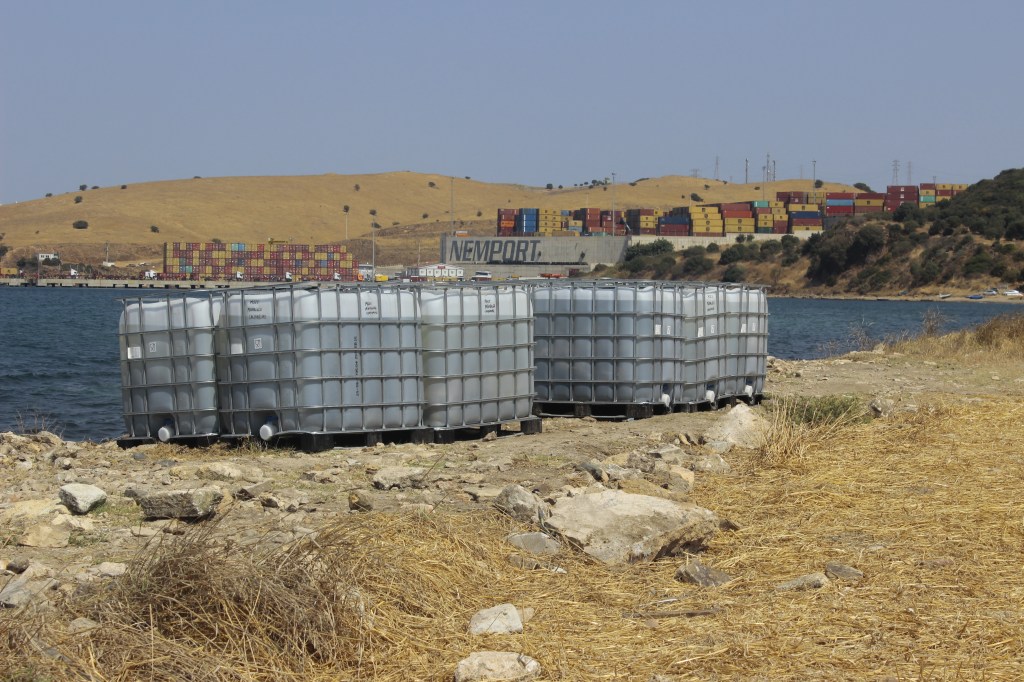
On August 29, 2018, an oil spill reached to the shores Gencelli Bay, in Foça district, İzmir, a small scenic town where people’s livelihood depends mainly on tourism and fishery and home to environmentally protected areas with high ecosystem value. Later, the source of the spill was detected to be a ship en route to the ship-breaking yards in Aliağa district, one of the largest and oldest heavy industrial development zones in Turkey, with various toxic industries such as smelting plants, oil refineries, and chemical facilities. The ship soon was charged with an “on paper” administrative fine and the cleaning costs, deposited directly to the state, but far from representing the real costs of the oil spill. Four months after the oil spill, the lawsuit for the detection of costs and damages, brought to court mainly by İzmir Bar Association and local NGOs, made it possible for the residents to file a claim for compensation, yet no one did. On the anniversary of the oil spill, subject to the thesis, another oil spill occured on September 2019 while the case studies were conducted in the field. In this context, based on an extensive desktop research and several in-depth interviews and focus groups with local stakeholders, this study first aims to investigate to what extent this administrative fine addresses the real costs and resulting socio-environmental injustices, and satisfies the conditions for rectificatory justice, by conducting an economic valuation of the damaged ecosystem services using IPBES’s NCP (Nature’s Contributions to People) approach. Second, it attempts to identify the institutional preconditions, either value articulating or political, such as trust, rule of law, free speech etc., for such a valuation exercise becomes relevant for reaching just outcomes. The fact that neither local residents nor people involved in economic activities dependent upon the ecosystem services of the marine environment take legal action for compensation while complaining about their losses in both quantitative and qualitative terms during in-depth interviews demonstrates that a reconsideration of different ways to operationalize rectificatory justice is required. The reasons why they do not take legal action are found out to be the lack of means to express their losses (in terms of quantitative and qualitative scales) and the lack of trust to legal institutions. The results suggest that real costs exceed the administrative fine even with conservative economic calculation assumptions, and that social and political institutions are central for an economic valuation to make sense for reaching rectificatory justice.


- A brief summary of the Sustainability Governance Scorecard© project by Argüden Governance Academy, which I am involved as a researcher since November 2019:
Argüden Governance Academy developed the Sustainability Governance Scorecard© to identify how Global Sustainability Leaders govern and conduct their sustainability efforts. The methodology relies on the broader perspective of sustainability –sustainability of sustainability efforts– which is the key for good governance. Argüden Governance Academy has been conducting this impact-research for the last three years to review the financial and sustainability disclosures of about 200 Global Sustainability Leaders from 7 countries through a governance lens. While the sustainability performance of various companies is difficult to compare, as such performance is context specific, their approach to governance of sustainability efforts provides important insights for everyone.
 BESTE GÜN ASLAN